Our precinct is on the site of the Nyinkka. The crow was in love with Nyinkka and it is a torrid love story, but it is here that she emerged and here her spirit returned and is for eternity.
Our story
Located in the heart of Tennant Creek in the Northern Territory, Nyinkka Nyunyu Art & Culture Centre is a leading Aboriginal cultural centre, museum and art gallery created by and for the Warumungu people of the Barkly Region. Established through the vision and leadership of Warumungu Traditional Owners, the Centre was created to protect a significant sacred site, preserve cultural knowledge, and share the stories, art and history of Warumungu Country with future generations and visitors alike.
The idea for Nyinkka Nyunyu began in 1995, when the Warumungu community initiated plans for a dedicated art and cultural centre in Tennant Creek. Over many years, more than eighty Warumungu Elders and Traditional Owners worked alongside architects, designers and cultural advisers to ensure the Centre reflected community knowledge, values and cultural authority. The Centre officially opened in 2003 and is owned and operated by Julalikari Council Aboriginal Corporation.
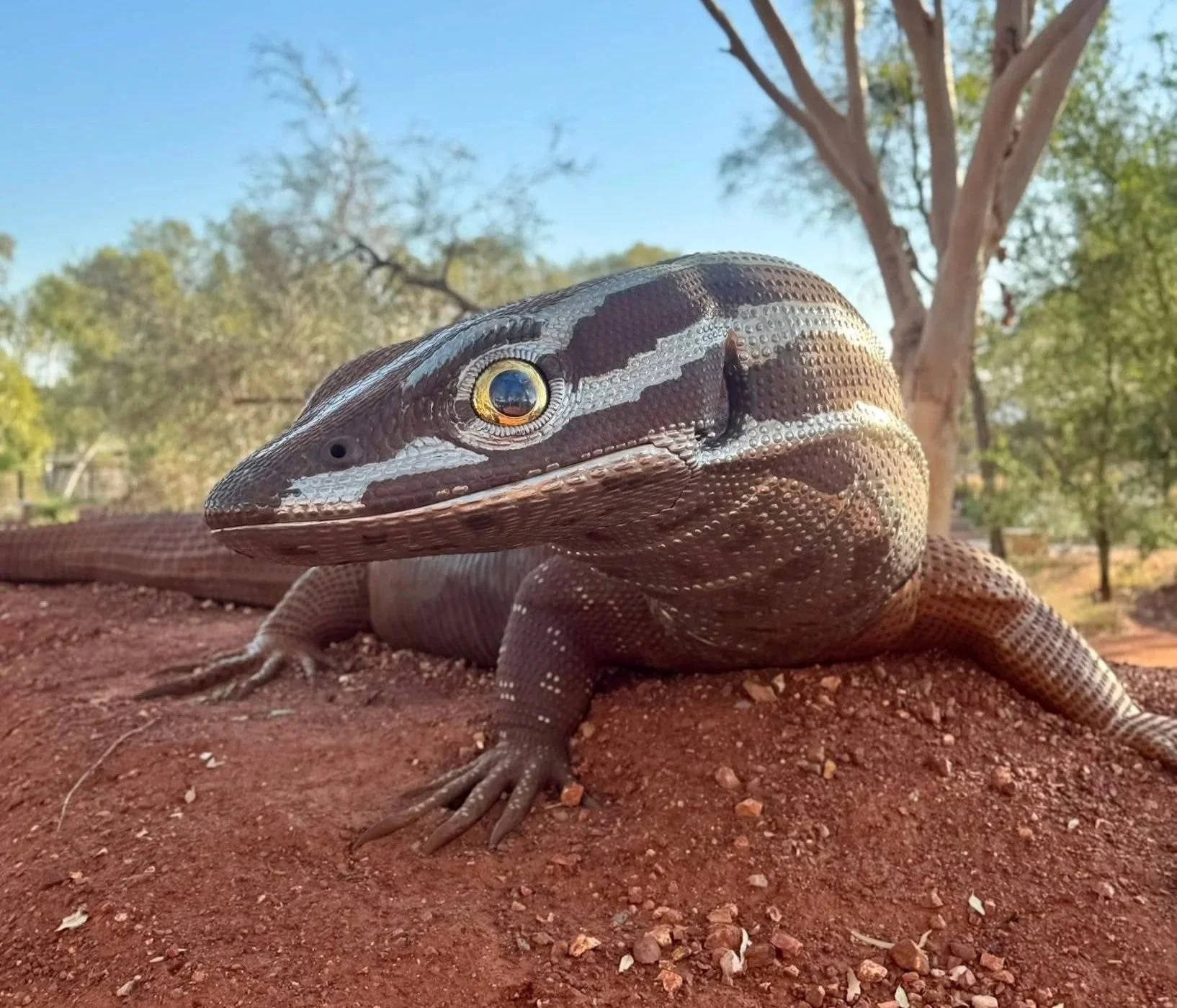
Nyinkka Nyunyu is located beside a sacred site connected to the ancestral Nyinkka, the spiny-tailed goanna, an important creation being in Warumungu culture. The Centre's distinctive architecture draws inspiration from the scales and movement of the goanna, embedding this important cultural story into the design of the building itself.
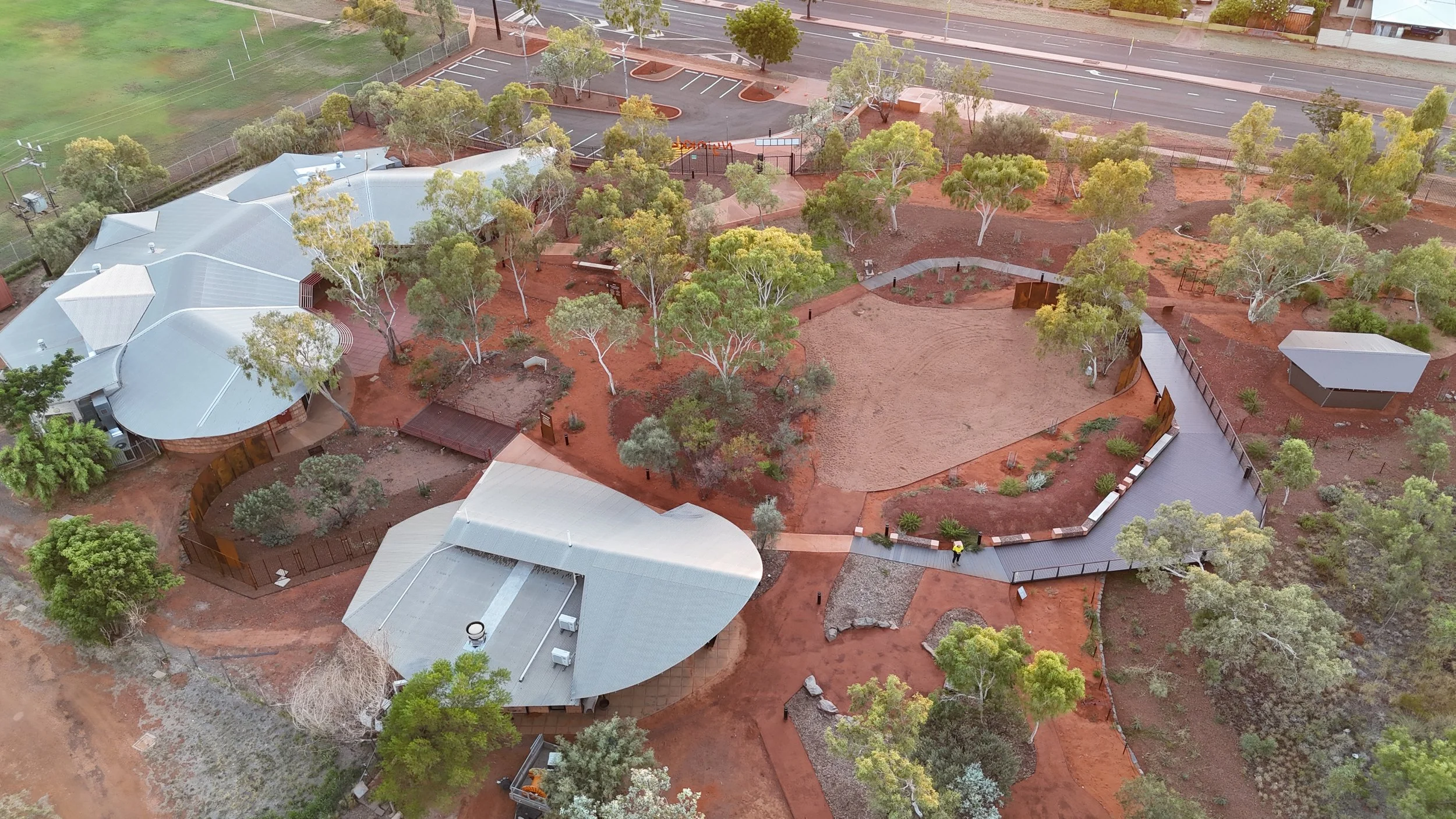
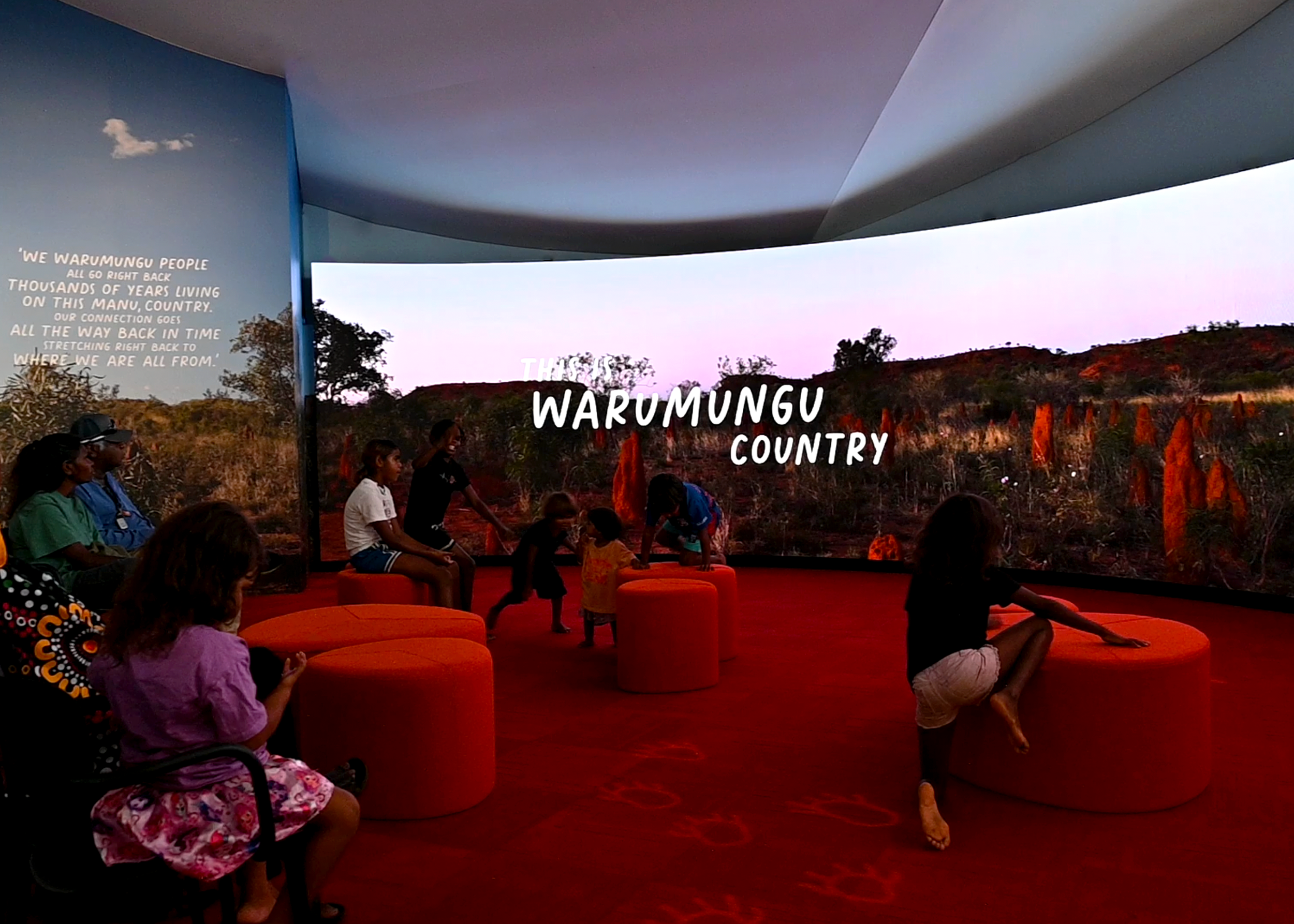
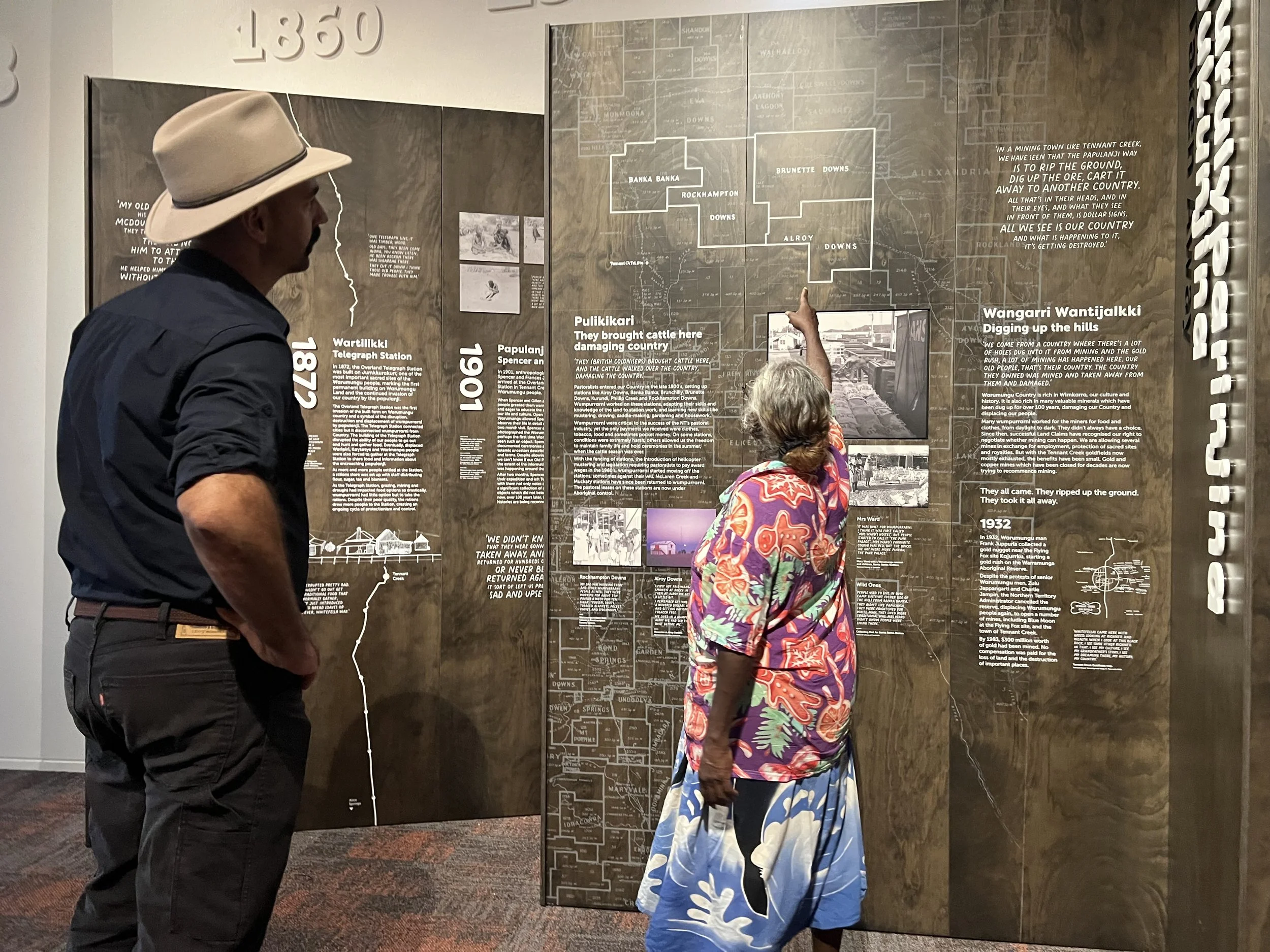
From its inception, Nyinkka Nyunyu was intended to be much more than a gallery. It was established as a Keeping Place, cultural meeting ground and educational hub where knowledge of Country, language, history and cultural practice could be shared and strengthened. Its permanent museum exhibition explores key aspects of Warumungu life and identity, while the surrounding precinct features native bush gardens, cultural spaces and outdoor areas used for performances, workshops and community gatherings.
Today, Nyinkka Nyunyu continues to play a central role in the cultural life of Tennant Creek and the Barkly Region. Through exhibitions, education programs, cultural tourism experiences and community events, the Centre supports local artists, celebrates Aboriginal culture and provides visitors with an authentic connection to the history, knowledge and living traditions of Warumungu Country.
Guided by Warumungu Traditional Owners and operated by Julalikari Council Aboriginal Corporation, Nyinkka Nyunyu remains a place where art, culture, history and community come together—protecting cultural heritage while creating opportunities for learning, connection and cultural exchange.
Meet the Team
-
Shauna Upton
MANAGER
-
Rachel Dixon
Studio Assistant
-
Waylon Ward
CENTRE ASSISTANT
-
Luke Morrison
GALLERY & RETAIL ASSISTANT
-
Dakoda Taylor-Hodgins
GALLERY & RETAIL ASSISTANT
-
Rebecca McAuliffe
GALLERY & RETAIL ASSISTANT
-
Jerry Kelly
Tour Guide